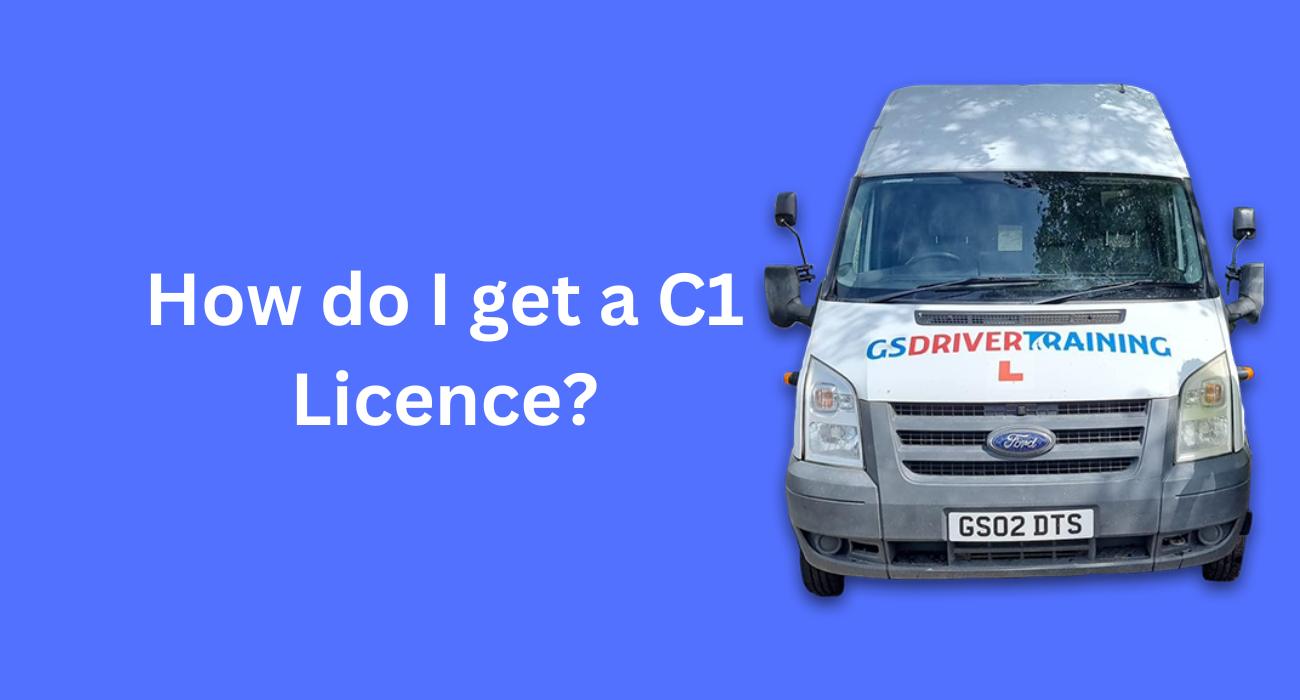
If you’re wondering how to get a C1 licence in the UK in 2026, this complete guide explains everything step by step — including eligibility, medical requirements, cost, timeframes, theory tests, and practical training.
A C1 licence allows you to drive vehicles between 3.5 and 7.5 tonnes, which is essential for ambulances, motorhomes, horseboxes, and many delivery vehicles.
Whether you need it for work or personal use, here is the full 2026 updated process.
What Is a C1 Licence?
A C1 licence (Category C1) allows you to drive:
-
Vehicles weighing between 3,500kg and 7,500kg
-
With a trailer up to 750kg
You may need a C1 licence if you plan to drive:
-
Ambulances
-
Horseboxes
-
Motorhomes over 3.5 tonnes
-
Delivery vehicles
-
Small commercial lorries
If you passed your car test before 1997, you may already have C1 entitlement. You can check your licence details through the official Driver and Vehicle Licensing Agency.
Who Needs a C1 Licence?
In 2026, demand for qualified 7.5-tonne drivers remains strong across several industries, including:
-
Healthcare and ambulance services
-
Parcel and logistics companies
-
Event and equipment transport
-
Construction supply delivery
-
Private motorhome ownership
How to Get a C1 Licence UK – Step-by-Step
If you’re searching for how to get a C1 driving licence UK, follow these simple steps:
Step 1: Check Eligibility
To apply for a C1 licence in 2026, you must:
-
Be at least 18 years old
-
Hold a full UK Category B (car) licence
-
Meet required medical standards
If you meet these conditions, you can move to the next stage.
Step 2: Complete Your D4 Medical
Before applying for provisional entitlement, you must complete a D4 medical examination.
A registered doctor will check:
-
Eyesight
-
Blood pressure
-
Medical history
-
Overall fitness to drive a larger vehicle
The completed D4 form must be submitted with your application.
This step ensures you are medically fit to operate heavier vehicles safely.
Step 3: Apply for Provisional C1 Licence
Next, you must apply for provisional C1 entitlement.
You will need:
-
Form D2 (lorry licence application)
-
Completed D4 medical form
-
Your current driving licence
-
Supporting identification documents
Official application guidance is available on GOV.UK.
Once your provisional licence is approved, you can start C1 training.
Approval usually takes 2–3 weeks.
Step 4: Pass the LGV Theory Test
Before taking your practical test, you must pass the LGV theory test.
The theory test includes:
Multiple-Choice Test
-
100 questions
-
Based on the Highway Code
-
Covers safety and regulations
Hazard Perception Test
-
Video clips showing developing hazards
-
Tests awareness and reaction time
Proper preparation increases your chances of passing first time.
Step 5: C1 Practical Training
After passing the theory test, you can begin practical training.
Training focuses on:
-
Vehicle control and positioning
-
Reversing manoeuvres (Module 3a)
-
On-road driving skills
-
Independent driving
You will train in a 7.5-tonne vehicle similar to the test vehicle.
Professional one-to-one training significantly improves pass rates.
Step 6: Pass the C1 Practical Test
The C1 practical test lasts approximately 60–90 minutes.
It includes:
-
Vehicle safety questions
-
Off-road reversing exercise
-
On-road driving assessment
-
Independent driving section
If you pass, your full C1 entitlement will be added to your licence.
How Much Is It to Get a C1 Licence in 2026?
Many learners ask, how much does it cost to get a C1 licence?
Here’s the average C1 licence cost in 2026:
| Item | Approximate Cost |
|---|---|
| D4 Medical | £50–£120 |
| Theory Test | £26 |
| Practical Test | £115 (weekday) |
| Training Course | £800–£1,500 |
Total Estimated Cost:
Between £1,000 and £2,000
Costs may vary depending on location and training provider.
How Long Does It Take to Get a C1 Licence?
If you’re asking how long does it take to get a C1 licence, the process typically takes:
-
2–3 weeks for provisional approval
-
1–2 weeks for theory preparation
-
3–5 days practical training
Most learners complete everything within 4 to 8 weeks.
Fast-track options may reduce the timeline.
How Hard Is It to Get a C1 Licence?
Many people worry about how hard it is to get a C1 licence.
The difficulty level depends on:
-
Your current driving experience
-
Confidence driving larger vehicles
-
Quality of training
If you are already a confident car driver, adapting to a 7.5-tonne vehicle is manageable with proper training.
With professional instruction, many learners pass first time.
How to Get a C1 Licence for a Motorhome
If you want to drive a motorhome over 3.5 tonnes, you will need a C1 licence.
The process is exactly the same:
-
Medical test
-
Provisional application
-
Theory test
-
Practical training and test
This is especially important for larger campervans and luxury motorhomes.
How to Get a C1 Licence for an Ambulance
If you are asking how to get a C1 licence ambulance, here’s what you need:
-
C1 licence
-
Driver CPC (if driving commercially)
-
Ambulance service training
Most ambulances fall within the 3.5–7.5 tonne range, so C1 entitlement is essential.
Do You Need Driver CPC?
If you plan to drive commercially (for hire or reward), you must complete Driver CPC.
Driver CPC requirements include:
-
Initial qualification (for new commercial drivers)
-
35 hours of periodic training every five years
If you only drive privately (for example, a personal motorhome), CPC is not usually required.
C1 Licence In UK – Train with GS Driver Training
If you want to get your C1 Licence In UK, GS Driver Training offers professional, DVSA-approved training to help you pass first time.
A C1 licence allows you to drive vehicles between 3.5 and 7.5 tonnes, including ambulances, horseboxes, motorhomes, and delivery vehicles.
UK-based instructors guide you through every stage of the process — from medical checks to practical test success.
Why Choose GS Driver Training in UK?
GS Driver Training provides:
-
DVSA-approved instructors
-
Modern 7.5-tonne training vehicles
-
One-to-one tuition
-
High first-time pass rates
-
Flexible course dates
They train learners across:
Professional training makes the C1 licence process smooth and stress-free.